
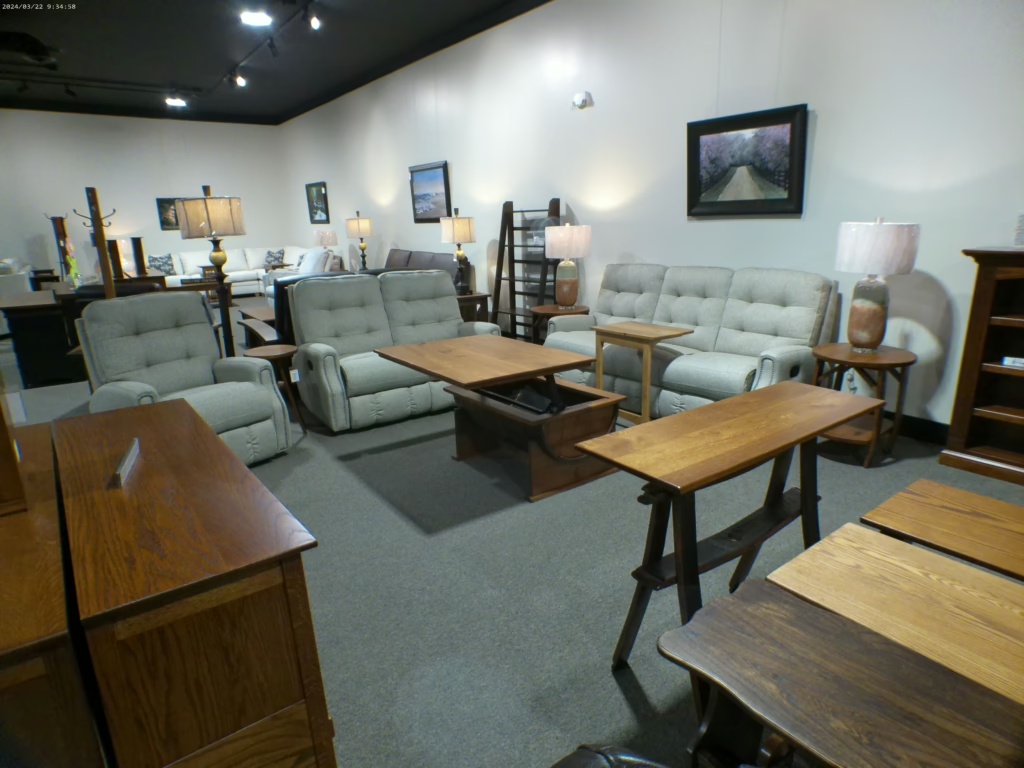
Everything You Need to Know About Amish Custom Furniture
As a society, we're accustomed to customization – everything from how we order our coffee, laptops, and cars. So, it stands to reason that we like to buy furniture that's built exactly the way we want it. That's custom furniture. And Amish cabinetmakers are leaders in building it. But what does custom furniture involve? Presenting everything you need to know about Amish custom furniture.
What is Amish custom furniture?
Amish custom furniture refers to furniture that Amish cabinetmakers build to order based on specific requirements from customers. These requirements include the furniture style, wood species, finish, hardware, and dimensions. Customization might also include an array of special features that enhance the look or user-friendliness of the furniture.
Here are some specific features of Amish custom furniture:
- Handcrafted construction. Amish cabinetmakers build each item of furniture by hand using traditional cabinetmaking techniques passed down from fathers to sons for hundreds of years. These tried-and-proven techniques include joining wood with sturdy dovetail and mortise, and tenon joints.
- Use of solid wood. For the most part, Amish cabinetmakers build furniture from solid hardwoods like oak, cherry, maple, and hickory. These woods are renowned for strength and rigidity. Solid wood does not easily get damaged when bumped, and shelves do not bow in the middle when loaded with books.
- Heirloom-quality. Handcrafted construction using solid hardwood results in furniture that is incredibly sturdy. In fact, Amish solid wood furniture is heirloom-quality! In contrast, most furniture sold in big-box furniture stores is put together on assembly lines using mostly manufactured woods like particleboard and medium-density fiberboard (MDF) as well as veneers and laminates. These materials do not have the strength and durability of solid wood furniture.
- Custom choices: Amish furniture gives you the freedom to order your furniture just the way you want it. This includes choosing the style, wood species, finish, hardware, and dimensions. You can also choose special features like the type of glass – such as in doors and side panels – soft-closing doors and drawers, lighting inside cabinets, and power options in items like living room chairs and office desks.
The benefits of customization are endless. It makes it possible to order an item of furniture to fit a specific spot in your home. Or a piece that matches your other furniture items. You can also 'design' furniture by blending elements from two or more styles – such as Mission, Shaker, and Modern. Customization also frees you up to order furniture for every room in your home – all unique pieces built just the way you want them!
Why do people order custom furniture?
Homeowners order custom furniture for several reasons, including to fill a specific spot in the home, serve as a functional and visually appealing accent piece, match existing furniture, excel in strength and durability, plus represent a valuable investment. Furniture buyers often order custom furniture for more than one of these reasons.
People buy custom furniture to fill a specific spot in the home.
This may take the form of a custom bookcase or cabinet that fills the space below a staircase. Or, it could be a dresser, desk, or sofa that fits between dormers in an upstairs bedroom. And what can be more beautiful than a custom piece to give your foyer a touch of elegance!
Custom furniture serves as functional and visually appealing accent pieces.
A piece of custom furniture is the perfect solution for any room in your house that needs an additional element of function – such as seating, storage, or a decorative item – as well as grandeur. Think of a uniquely-sized hallway bench, a corner cabinet in the dining room, or an accent table at the top of the staircase.
Ordering new furniture items to match existing pieces is a top reason for going custom.
For example, a homeowner with a Mission-style living room set might order a Mission bookcase to replace the tattered big-box store piece. Or, a young couple who inherits a Shaker-style bed, nightstand, and dresser may want a matching chest of drawers, blanket chest, and cheval mirror.
People order custom furniture because they want furniture that excels in strength and durability.
Astute furniture buyers know that custom-built, solid hardwood furniture – such as furniture made by Amish cabinetmakers – far surpasses furniture put together on assembly lines using bargain substitutes, particleboard, MDF, veneers, and laminated cardboard. Bargain furniture is held together by screw-to-tighten pins, brads, and staples. Custom solid wood Amish furniture has dovetail and mortise and tenon joints, wooden dowels, and countersunk screws. No wonder custom-built Amish furniture is so sturdy; it typically gets passed down from one generation to the next.
Custom furniture represents a valuable investment.
Custom furniture, including Amish solid hardwood furniture, is typically built to last. Indeed, the handcrafted process of cabinetmaking, using traditional methods, top hardwoods, and careful attention to detail, results in furniture that's superior to others in fit and finish, looks, and durability. Custom hardwood furniture may cost more initially than others. But the furniture is designed to last for generations to come, making it a valuable, long-term investment.
Do big-box stores sell custom furniture?
Not really. Big-box stores and popular brand furniture stores typically sell mass-produced furniture with limited options, such as finish and color of upholstery. But they do usually sell furniture that customers can order according to specifications such as wood type, finished size, type of glass in doors and panels, hardware, and cabinet interior lighting. So, if you're interested in custom furniture, your best choice is Amish furniture from a store like Brandenberry Furniture in Shipshewana, Indiana.
Does custom furniture cost more than others?
Yes. Custom furniture, such as furniture made by the Amish, typically costs more than mass-produced furniture due to its individualized construction, higher-quality materials, and greater design and material complexity. That said, custom furniture is deemed to be more valuable than mass-produced furniture because it typically gets passed down from one generation to the next.
Individualized construction.
Custom furniture is typically made one at a time. This means higher costs since the manufacturing process does not benefit from economies of scale, in which the cost of each product decreases in proportion to the number of units made.
Higher-quality materials.
Amish cabinetmakers and other builders of custom furniture typically use higher-quality materials than makers of mass-produced furniture. For example, Amish artisans use hardwoods like oak, maple, and cherry, plus quality hardware, fabrics, and leather. In contrast, mass-produced furniture makers use wood substitutes like particle board, MDF, veneers, and laminates.
Design complexity.
Custom furniture often integrates complex design and cabinetmaking elements like detailed carvings, fluted columns, inlays, and steam-bent treatments into pieces of furniture. These add elegance – and cost – to each piece.
Fans of custom furniture will point out that the higher cost of custom furniture is offset by its superior looks, fit and finish, strength, and durability. So, custom furniture represents lasting value.
Does Amish custom furniture take longer to build?
Yes. In general, Amish custom furniture takes longer to build than mass-produced furniture. The reasons are handmade construction, an emphasis on quality and detail, customization, special services, availability of cabinetmakers, and the availability of lumber.
Handmade construction.
Amish cabinetmakers build each piece of fine furniture by hand using traditional methods. This process is slower than mass-produced furniture, which is typically put together on assembly lines using precut pieces of manufactured wood plus a variety of pins, fasteners, and dowels.
Emphasis on quality.
In building custom furniture, the Amish use quality components, including solid hardwoods, plus skills and techniques handed down from their ancestors. These skills include joining wood with dovetail and mortise, and tenon joints. Amish artisans also handcraft each piece of furniture as if it were their own. These factors tend to extend construction time. In contrast, manufacturers of mass-produced furniture traditionally focus on volume and affordability.
Customization.
It stands to reason that the process of custom-building furniture is slower than building identical pieces of furniture on an assembly line.
Special services.
In some cases, custom furniture orders include extra services that might be provided by artisans in another shop. These services include computer wood etchings and steam-bending wood to create eye-catching curves, like in a chair's backrest. Providing these services incurs extra time.
Availability of cabinetmakers.
Amish cabinetmakers handcraft furniture in succession – one after another. So lead times are typically longer than the mass-production process.
Availability of lumber.
The process of selecting and preparing real wood – harvested from local forests — takes time. There is no equivalent of synthetic wood that's made in a factory and shipped to assembly-line furniture manufacturers.
So, while Amish custom furniture takes longer to build than mass-produced furniture, the superior quality and durability of custom furniture are well worth the wait.
Can I order Amish furniture in any style?
Yes. You're free to order Amish custom furniture in various styles, including Traditional, Shaker, Mission, Rustic, and Modern styles – or any combination of styles. Irrespective of the style you choose, Amish cabinetmakers will handcraft your furniture using solid hardwoods and traditional woodworking methods. A review of the main furniture styles will help you determine which one comes closest to what you're looking for in your item/s of furniture.
Traditional furniture features elements like crown moldings, intricate carvings, turned legs, and a curved silhouette. Chairs may feature a high back and curved, winged sides, while occasional tables might come with a marble top and claw-foot legs. Other features include dark wood stain, luxurious upholstery, and gold trim.
Shaker furniture is characterized by a practical, simple, and minimalist design. Shaker furniture has no ornamentation. Rather, the style features simple, gracious curves; round, wooden knobs; tapered feet, and lighter wood stains. These features give Shaker its simple elegance and timeless look and feel.
Mission furniture catches the eye with its straight lines, 90-degree angles, extreme simplicity, lack of ornamentation, and hefty, stately profile. Some Mission pieces are built with stylish extras like crown moldings, slats, decorative corbels, visible tenons, and ebony inlays.
Rustic furniture highlights the imperfections and unique characteristics of natural wood. As such, it typically features knots, cracks, and other natural imperfections. Some pieces have visible saw marks (called 'rough sawn'), natural bark, and rugged 'live edges.'
Modern furniture features bold geometric shapes (such as rectangles), strong, straight lines, and sweeping curves. Furniture designers often incorporate materials like leather, vinyl, plastic, and chrome-plated steel into Modern furniture pieces.
Can rustic furniture be customized?
Indeed, rustic furniture, such as furniture built by Amish cabinetmakers, is often customized to meet the preferences of furniture owners. What makes rustic furniture different from all others is that it showcases the wood in its natural state. This is why most rustic furniture is designed with the straightforward and burly Mission style: straight lines, square posts, no ornamentation, and so forth. Certainly, you can customize your desired piece of furniture by stipulating features like the size, type of hardware, full-extension and/or soft-close drawers, etc.
But the customizing feature that makes rustic furniture different from other furniture styles is the wide variety of finishes. Most rustic furniture starts with oak, hickory, or brown or wormy maple hardwood. From there, the finishing options are wide open. They include:
Wood surface treatment options such as smoothly finished (displaying vibrant woodgrain, knots, and cracks), 'rough-hewn' with visible saw marks, or smoothly finished with some visible tree bark.
Variety of hardware and metal accents.
Hardware includes black Mission pull hardware and wood knob hardware. Metal accents take the form of black metal strips strategically attached to the corners of cabinets, corrugated metal inlays in doors, as well as doors replicating sliding barn doors.
Unique stains and paints.
This is the main feature that makes rustic furniture so varied – and so different from other styles of furniture. Indeed, rustic finishes run the gamut from a 'barely rustic' look to finishes that give the impression the piece has been subject to the elements for a millennium. They include:
- Barely rustic look: Reclaimed oak in a smooth finish with FP-Murky Stain.
- Traditional rustic look: Rough-sawn brown maple with Almond Stain and #10 sheen.
- Bleached rustic look: Rough-sawn wormy maple with Belaire Stain.
- Reclaimed barn wood look: Reclaimed oak with FP-Murky Stain.
- Vintage rustic look: Tops featuring reclaimed oak with a natural stain, base in rustic brown maple finished with a WB Glaze (antique white) or entire piece with Antique Gray Glaze.
- Distressed rustic look: Brown maple with OCS-118 Antique Slate finish.
So, suppose you like rustic furniture and want a particular look. In that case, you can order any piece of rustic furniture from Brandenberry and get it customized with the rustic finish you really fancy.
Where is Amish furniture built?
Most Amish custom furniture is built in small, family-owned woodshops located in or near Amish farming communities in Indiana, Ohio, and Pennsylvania. The Amish craftsmen use traditional woodworking methods and tools, along with some modern equipment. Also, the Amish live a simple lifestyle, which restricts them from using municipally-supplied electricity. As a result, they run their modern pneumatic woodworking tools with compressed air supplied by diesel generators.
Do Amish cabinetmakers build furniture to order?
Absolutely. Building furniture to order – also known as custom furniture – is the mainstay of most Amish cabinetmaking shops. And it's a top reason lovers of fine furniture overwhelmingly choose Amish furniture. Here are three ways in which you can order custom furniture from Brandenberry Furniture, located in Shipshewana, Indiana.
- Visit Brandenberry Furniture's website and choose the furniture you desire. Click the "Customize this Product" tab and fill in your contact information. Also, fill in the blank field that asks "What else would you like to customize?". Then, click the "Get Your Customized Quote" tab. A product specialist will contact you to confirm the order details and then start the building process.
- Visit Brandenberry Furniture's website and choose the furniture you desire. Then, click on the LiveChat icon at the bottom right corner of your screen. A knowledgeable product consultant will guide you through the custom ordering process.
- Visit Brandenberry's 'brick and mortar' store in Shipshewana, Indiana, and check out the array of furniture on display. A friendly sales associate will be available to guide you through the custom ordering process.
Buying furniture for your home is a big deal. That's why it's so important to buy furniture with all the features your heart desires. Come see custom Amish furniture from Brandenberry in Shipshewana and learn more about everything you need to know about Amish custom furniture. Or browse our Amish furniture products.